The younger you are, the more prone you are to “nomophobia”
According to a recent survey by an internet security firm, more people
are "nomophobic". The study discovered
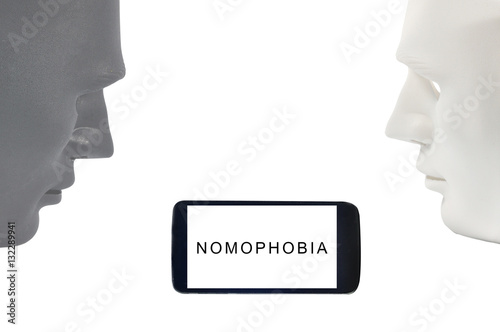
youngsters are bound to experience the ill effects of phone anxiety. Nomophobia is a nonsensical level of fear when you are out
of mobile phone contact. The survey also revealed that 2/3rd of
mobile phone users get on edge when losing their phone, running short of battery
power or landing in an area with fewer or no network coverage.
 |
In 2018, Nomophobia was termed as the word of the year in
the Cambridge Dictionary which describes a condition that many of us are
familiar with but are unfamiliar about the term for it. The word phobia
means fear, while ‘m’ stands for mobile
phone. Simply, nomophobia can be understood as no
mobile phone phobia.
An abstract
published in the journal Cyber psychology, Behaviour, and
Social Networking stated that “When users perceive mobile phones as
their extended selves, they are bound to end up attached to the devices, which,
thusly, prompts, nomophobia by increasing the urge to phone proximity-seeking
tendency”
According to the recent
survey, the younger you are, the more prone you are
to nomophobia. The youngest age group (18 -24 years) beats the
nomophobic list by bagging 77% which is 11% more than that of the aged (>35
years) population.

Women are likewise
bound to be unnerved by mobile phone separation, with 70% of respondents
reporting the ailment (nomophobia) compared to 61% of men. “This might be on
the grounds that men are bound to have two phones and are less inclined to lose
both” says Andy Kemshall, the CTO and co-founder of secure Envoy.

Adding ‘sleep
deprivation’ as one of the potential problems of nomophobia Carr-Gregg says "While teddy doesn't communicate, the phone does".
Children of this generation cannot entertain themselves without the help of the
smart phone. The phone has become our digital security blanket.

In the meantime,
Indian analysts have likewise assessed mobile phone dependence among students
at M.G.M. Medical College and the associated hospital of central India and
reported that 78% of respondents were found to be dependent on their mobile
phones from their young age. The study also concluded that India, after China, is the second biggest mobile phone
market in the world. The Telecom Regulatory Authority of India (TRAI) revealed
that there were 884.37 million mobile connections in India as of January 2019,
while China had 963.68 million.
The report of a cross-sectional study, published by the
Indian Journal of Community Medicine revealed that out of 200 medical students
who were recruited for the study, about 1 in 5 students were nomophobic. The
study asserted that the mobile phone has become a necessity because of the incalculable
advantages that a mobile phone provides like daily reminder, dairy writer,
calculator, games and videos, camera, music on the go and many more to add on.

Dr. Sanjay Dixit,
one of the researchers and the head of the Indian Journal of Community Medicine
said, accidents lurk while nomophobes fix their
attention on phones. According to Dixit, up to 25% nomophobes reported
accidents while messaging or talking on the phone, which includes minor road
accidents, falling while going upstairs or downstairs and stumbling while
walking. More than 20% also reported pain in the thumbs due to excessive
texting.
Dr.Dixit
also said that "Nomophobia is not included in the DSM [Diagnostic and
Statistical Manual of Mental Disorders] yet, however it is an upcoming and most anticipated problem particularly among
youngsters. For the first time on this continent [India], we are trying to make
it more scientific," he added, referring to his undergoing research on “nomophobic India”.

Prevalent it may be, nomophobia, however, is not yet a certified phobia.
So,
what about you? Do you suffer from nomophobia?


This comment has been removed by the author.
ReplyDeleteGot a new condition..... That explains our dependency....
ReplyDeleteA must read content for all. Amazing ma'am.
ReplyDeleteVery informative Steffi! Keep up the good work.
ReplyDeleteThank-you Dr. Madhu... Many more to come
Delete